The Essential Guide to Living in Waltham, MA for Young Professionals
Explore Waltham’s small-city vibe: Moody Street dining, 2 commuter-rail stops, ~$865K median homes, 45% condo sales, and 30-min trains to Boston.
Written ByClaudia Lavin
PublishedJuly 1, 2026
UpdatedJuly 8, 2026
I'm Claudia Lavin Rodriguez, a Lexington, MA real estate agent helping first-time buyers, young professionals and families across Greater Boston — from first search to keys. Serving Lexington, Somerville, Waltham, Arlington, Burlington and Belmont, MA.
Waltham, MA
Region
In July 2026, the median sale price for homes in Waltham, MA was $790,000, down 3.7% from a year earlier.
# Waltham, MA Neighborhood Guide: Modern Living in a Family-Friendly Community
Is Waltham, MA a Good Place to Live for Young Professionals?
Yes — Waltham hits a rare sweet spot: genuine small-city energy by day, a relaxed and community-minded feel by night, and a Boston-adjacent location that keeps your commute short. It's one of the first places I point young professionals toward when they want career access without surrendering to Boston's rents or Newton's price tags.
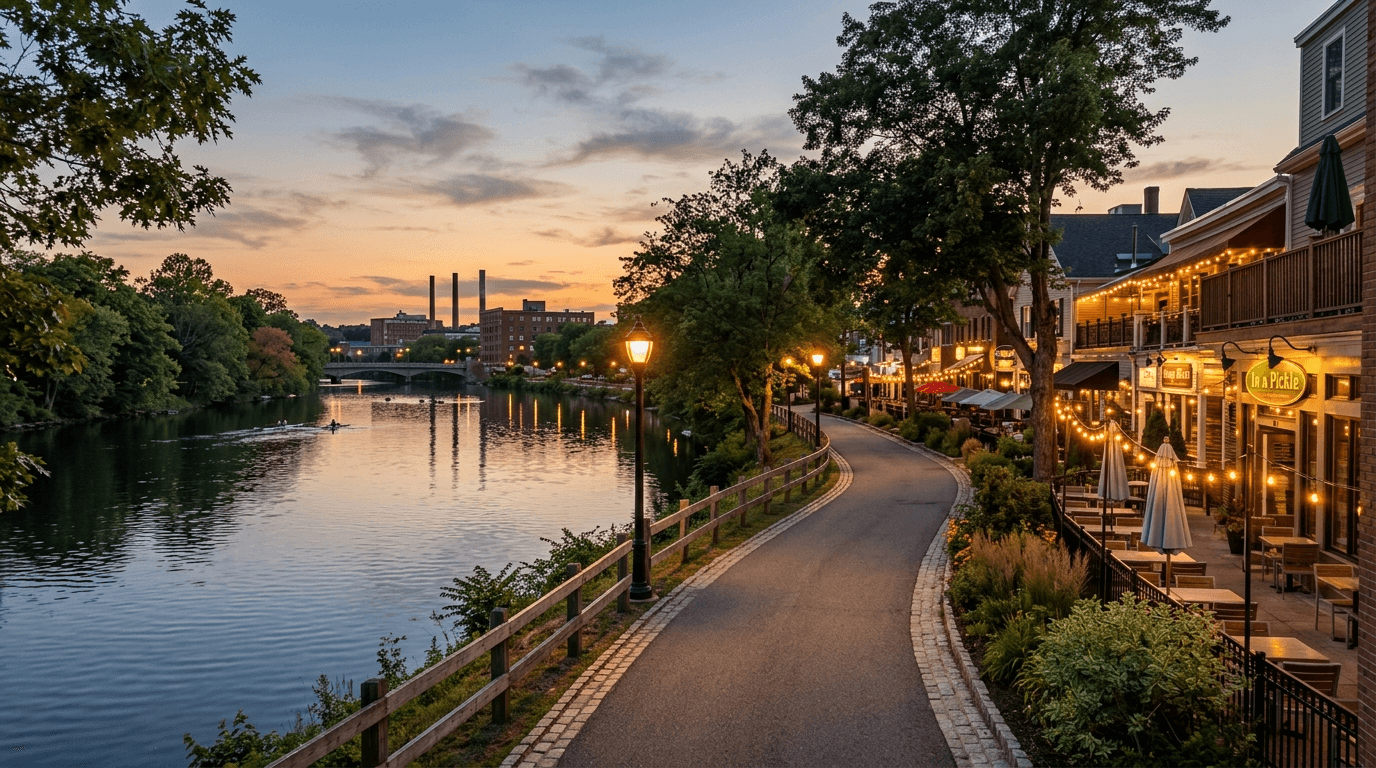
Here's what makes it work. During work hours, Waltham hums. The Route 128 corridor and the biotech cluster draw a serious professional crowd, and downtown carries a steady daytime buzz. But when evening arrives, the tempo shifts. Neighborhoods go quiet, families spill out onto the RiverWalk , and Moody Street becomes a dinner-and-drinks destination rather than a corporate lunch spot.
The sense of community is real, too. Waltham runs a full calendar of cultural events and seasonal festivals, and it's noticeably more diverse than most of the inner-ring suburbs I work in. At roughly 5,500 residents per square mile, it's denser than the sleepy commuter towns nearby — which is exactly why it feels like a city, with sidewalks, walkable coffee, and things to do, rather than a subdivision you have to drive out of every time you want dinner.
Waltham Market Snapshot: Prices, Volume & Speed
A quick-read hero snapshot for young professionals evaluating Waltham: an $800K blended median, meaningful condo availability, and fast absorption for well-priced homes.
For buyers coming from Somerville or Arlington who want more space but the same walkable-neighborhood texture, Waltham is often the answer. You get that "small city" quality of life while staying close to everything.
What Are Homes and Condos Like in Waltham, MA?
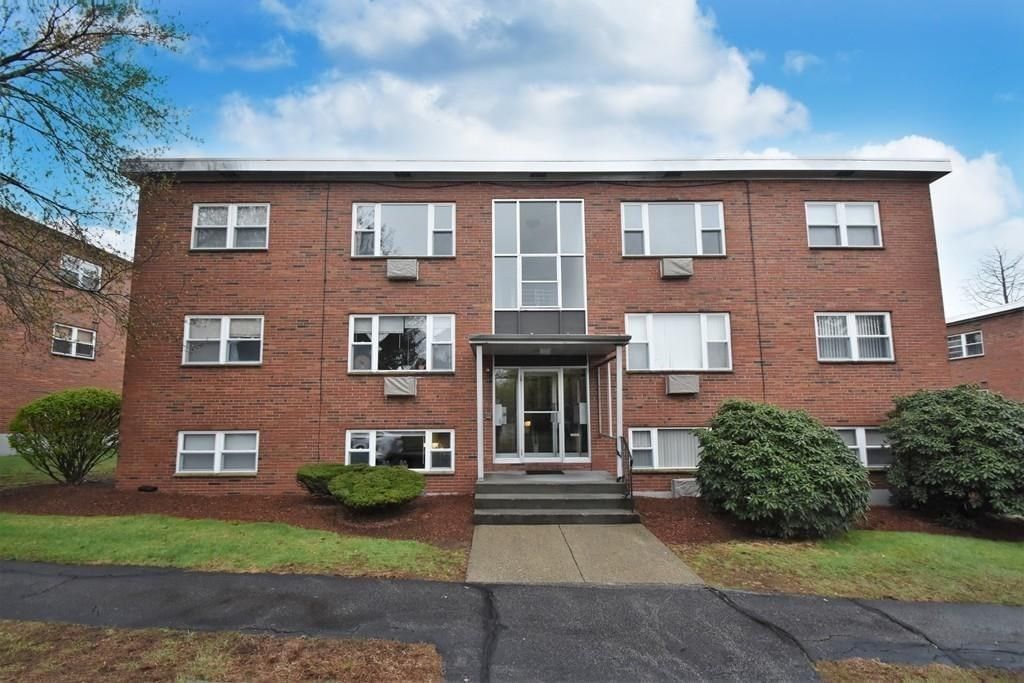
Expect a healthy mix: single-family homes with a 12-month median around $894,500, condos and townhomes near $625,750, and a growing supply of new-construction and fully renovated turnkey properties. Roughly 45% of recent sales were condos — a meaningful figure for younger buyers who want a modern, low-maintenance entry point.
That condo share matters. When a first-time buyer tells me their budget tops out in the $600s, Waltham stays realistic in a way Newton or Belmont simply doesn't. You'll find contemporary townhomes near the city center built for lock-and-leave living — open floor plans, smart-home wiring, updated finishes — which is ideal if you're building a career and don't want your weekends eaten up by yard work.
On the single-family side, lots typically run about 0.15 to 0.25 acres: enough yard for a growing family, a grill, and a dog, without the upkeep of a large suburban parcel. Many of these homes have been modernized inside older shells, so you get character on the outside and updated systems within.
A quick note on the numbers, because I want you to read this market accurately. That $894,500 single-family figure is the 12-month median from MLS sold data. In the mid-year Greater Boston sub-market report, Waltham's single-family median comes in around $865,000 — a current-snapshot view that runs slightly softer as prices cooled modestly through 2026. Same metric, two different windows. I use the 12-month figure for a stable baseline and the $865K snapshot when comparing Waltham head-to-head against its neighbors.
Greater Boston Price Context: Waltham vs. Nearby Markets
Waltham’s single-family median sits below several nearby premium inner-ring markets, giving buyers a relative value story while remaining close to Boston and major employment centers.
Sub-Markets
Greater Boston
Boston Neighborhoods
Waltham’s single-family median sits below several nearby premium inner-ring markets, giving buyers a relative value story while remaining close to Boston and major employment centers.
That comparison is the whole value story. When a buyer tells me Newton or Belmont is out of reach — and at roughly $1.5M in Newton and $1.4M in Belmont, they often are — Waltham's ~$865,000 snapshot median lands hundreds of thousands lower while keeping you inside the same commuting orbit. Even against Watertown ($967,000), Waltham reads as relative value.
Just be ready to move. Well-priced homes here typically go under agreement in 1–2 weeks, so pre-approval isn't optional — it's your ticket to the table.
What Are the Best Neighborhoods in Waltham, MA?
Waltham isn't a monolith. Each micro-market has its own price point and personality, and knowing them is half the battle in a fast market.
Waltham Neighborhood Median Listing Prices
Neighborhood-level listing prices help younger buyers compare Waltham’s micro-markets, from relatively lower-priced West End and Bleachery to higher-priced North Waltham and Piety Corner.
Neighborhood-level listing prices help younger buyers compare Waltham’s micro-markets, from relatively lower-priced West End and Bleachery to higher-priced North Waltham and Piety Corner.
•North Waltham (~$949,999) and Piety Corner (~$927,450) sit at the top end — quieter, more residential, and popular with families settling in for the long haul.
•South Side (~$849,450) is a strong middle-ground pick: walkable to Moody Street energy while still feeling like a neighborhood, and often where I take first-time buyers who want proximity without the top-tier price.
•West End (~$812,000) and Bleachery (~$839,000) are typically the most accessible entry points, which makes them my go-to for young professionals stretching to get into Waltham for the first time.
The takeaway: the citywide median masks real spread. Pick the neighborhood that fits your commute and your budget, and you can save meaningfully without leaving Waltham.
Where Do People Gather in Waltham, MA?
Moody Street is the social heart — Restaurant Row — backed by the Charles River RiverWalk, Prospect Hill Park, and Waltham Common for community events. This is where the "quality of life" argument gets made in real terms.
Moody Street is genuinely one of the best dining strips in Greater Boston, packed with everything from craft breweries to standout independent spots. In any given week I might send clients to Peshawri Kebabs for something spectacular or steer them toward the neighborhood cafés — a morning at Common Good Co. is a nice way to get a feel for the downtown rhythm before you commit.
For the outdoors, the Charles River RiverWalk is the everyday anchor — jogging, biking, stroller walks, and a scenic connection running right through the city. When buyers tell me they want trail access "by foot or bike," this is exactly what they're picturing. Prospect Hill Park raises the ambition level with real hiking trails, picnic areas, and skyline views of Boston.
Finally, Waltham Common is the civic living room — seasonal festivals, concerts, and the kind of community gatherings that turn neighbors into friends. When people ask me whether Waltham "has a downtown," this trio of Moody Street, the river, and the Common is my answer.
Are the Schools in Waltham, MA Good for Families?
Waltham's biggest recent civic bet is education: a brand-new high school that opened in 2024, a roughly $375 million facility. For anyone buying with a five-to-ten-year horizon, this is a signal worth reading.
$375 millionNew Waltham High School Construction Cost
New Waltham High School Investment
For buyers thinking long-term and family-oriented, Waltham’s major high school investment is a defining civic infrastructure project, with substantial bond financing tied to the new facility.
Let me be precise about the financing, because it matters. That $375M project was funded through a combination of sources — city bonds plus state reimbursement — not entirely by borrowing. Since 2020, the city has issued about $238.9 million in bonds tied to the school, which represents 73% of all city bonds over that period. So the high school was largely bond-financed relative to the city's overall debt load, though the bonds don't cover the full sticker price. Either way, it's a major, deliberate investment.
Why should this matter to a young professional who doesn't have kids yet? Two reasons. First, resale — families buy where the district is improving, and infrastructure like this supports long-term values. Second, it tells you where civic priorities sit. Elementary options like MacArthur and Fitzgerald post solid GreatSchools ratings, and the city keeps investing in facilities like the inclusive playground at Northeast School. When I tour homes with growing families, this is the first thing we talk about.
How Is the Commute From Waltham, MA to Boston and Cambridge?
Excellent — Waltham sits about 10 miles from downtown Boston, with two commuter-rail stops, direct highway access via I-90 and I-95/Route 128, and express bus service. For professionals, this is arguably Waltham's single strongest selling point.
Live-Work-Commute Profile for Young Professionals
Waltham combines a Boston-adjacent commute with a dense small-city feel and major local employers—useful context for young professionals who want career access without giving up community amenities.
•Commuter Rail (Fitchburg Line): Two stops give you options — Waltham Station at Central Square (right by Moody Street) and Brandeis/Roberts in the western part of the city. Trains reach North Station in about 30 minutes.
•Driving: Via I-90 (the Mass Pike), downtown Boston runs roughly 20 to 30 minutes off-peak. I-95/Route 128 wraps the city for quick trips to the northern and southern suburbs.
•Express bus: Direct service into downtown Boston rounds out the transit picture.
•Reverse commute advantage: If you work in Waltham or along Route 128 — think Thermo Fisher, Boston Dynamics, PTC, or Raytheon — you may skip the Boston slog entirely and enjoy one of the shortest commutes in the region.
That last point is the quiet winner. Many of my clients live and work within the Waltham/128 corridor, which puts the tech-and-biotech job engine right on their doorstep. Compared with living deeper in Boston or Cambridge and reverse-commuting out, Waltham lets you keep both a walkable neighborhood and a short drive to the office.
If you want career access, real community, and a home that costs meaningfully less than Newton or Belmont, Waltham deserves a serious look. I'm happy to walk you through the specific neighborhoods and trade-offs so your first offer is a winning one — without overpaying to get there.
Is Waltham, MA a good place to live for young professionals and families?
Yes. Waltham, MA offers small-city energy, walkable amenities, and a community-minded feel while staying close to Boston and the Route 128 job corridor. Its density of roughly 5,500 residents per square mile supports sidewalks, coffee shops, restaurants, and everyday conveniences without feeling like a purely suburban bedroom community.
What kinds of homes and condos are available in Waltham, MA?
Waltham, MA has a strong mix of single-family homes, condos, townhomes, renovated properties, and new-construction options. Recent sales show a 12-month median of about $894,500 for single-family homes and about $625,750 for condos and townhomes.
Is Waltham, MA a good place to buy a condo or townhome?
Yes. Condos make up roughly 45% of recent Waltham sales, giving first-time buyers and young professionals more low-maintenance options than many nearby higher-priced suburbs. Contemporary townhomes near the city center often include open layouts, updated finishes, and lock-and-leave convenience.
Is Waltham, MA more affordable than nearby towns like Newton or Belmont?
Waltham, MA is generally more affordable than Newton and Belmont while keeping buyers in a similar commuting orbit. A current single-family snapshot around $865,000 is well below Newton at roughly $1.5 million and Belmont at roughly $1.4 million, and also below Watertown at about $967,000.
Are the schools in Waltham, MA good for families?
Waltham, MA has made a major recent investment in education with a new high school that opened in 2024, a roughly $375 million facility funded through city bonds and state reimbursement. Elementary options such as MacArthur and Fitzgerald have solid GreatSchools ratings, and the city has also invested in facilities like the inclusive playground at Northeast School.
How is the commute from Waltham, MA to Boston and Cambridge?
The commute from Waltham, MA is excellent for Boston-area professionals. The city is about 10 miles from downtown Boston, has two Fitchburg Line commuter rail stops, offers express bus service, and has highway access via I-90 and I-95/Route 128.
Does Waltham, MA have commuter rail access?
Waltham Station at Central Square and Brandeis/Roberts in the western part of the city both serve the Fitchburg Line. Trains reach North Station in about 30 minutes, and Waltham Station is close to Moody Street and the downtown area.
What are the best Waltham, MA neighborhoods for buyers balancing budget and lifestyle?
South Side is a strong middle-ground option with walkability to Moody Street and a neighborhood feel. West End and Bleachery are typically more accessible entry points, while North Waltham and Piety Corner sit at higher price points and are quieter, more residential areas popular with long-term family buyers.