Belmont, MA Real Estate: The Essential Guide for Young Professionals
Explore Belmont’s Town of Homes vibe: 4.6 sq mi, 2 Fitchburg Line stations, $1.16M median value, walkable Center & Cushing Square.
Written ByClaudia Lavin
PublishedJuly 1, 2026
UpdatedJuly 8, 2026
I'm Claudia Lavin Rodriguez, a Lexington, MA real estate agent helping first-time buyers, young professionals and families across Greater Boston — from first search to keys. Serving Lexington, Somerville, Waltham, Arlington, Burlington and Belmont, MA.
Belmont, MA
Region
In July 2026, the median sale price for homes in Belmont, MA was $1,475,000, up 9.3% from a year earlier.
# Belmont, MA Real Estate: The Ultimate Neighborhood Guide for Young Professionals
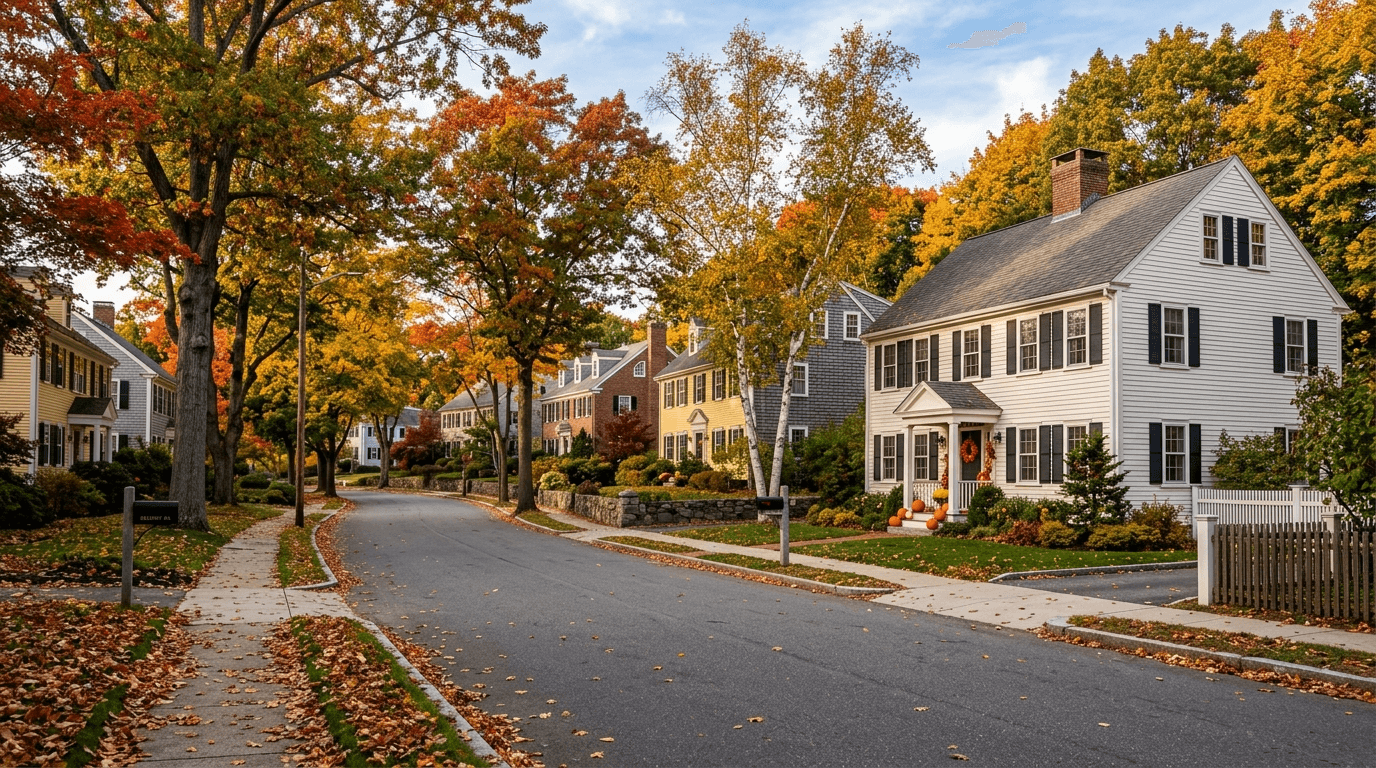
Belmont is one of those rare Greater Boston towns that feels like a genuine retreat while sitting practically on Cambridge's doorstep. Whenever I bring young professionals and first-time buyers here for the first time, I can see them exhale the moment they turn onto the tree-lined side streets. Then they run the numbers on the commute and realize they don't have to choose. Here's what you need to know before you begin your search.
Belmont at a Glance: Cost, Income, Taxes & Commute
A quick-read profile of Belmont for young professionals weighing premium housing costs against strong incomes, Boston access, and family-oriented community fundamentals.
Is Belmont, MA a Good Place to Live for Young Professionals?
Yes—Belmont offers a quiet, family-oriented "Town of Homes" atmosphere while keeping you just 10 miles from Boston, making it ideal for professionals who want calm streets without sacrificing city access. That balance is exactly why my referral pipeline stays full of clients leaving denser neighborhoods behind.
The "Town of Homes" nickname is well deserved. Settled in 1630 and incorporated in 1859, this 4.6-square-mile community leans hard into residential life, safe streets, and a genuine sense of neighborhood. It ranks near the top of the state year after year, landing at #3 of 411 for Best Places to Raise a Family in Massachusetts and #5 of 189 for Best Suburbs to Live.
For young professionals in particular, the draw is a quieter lifestyle within easy reach of major career hubs. Belmont scores a solid 82/100 on lifestyle-fit metrics—competitive with family-favorite Arlington and right alongside high-scoring young-professional hubs like Somerville and Cambridge.
Lifestyle Fit Scores: Family Towns and Young Professional Hubs
Belmont scores competitively among family-focused towns while sitting near several high-scoring young-professional hubs, reinforcing its appeal for buyers who want both career access and a quieter community feel.
Family-Oriented Communities
Young Professional Hubs
Belmont scores competitively among family-focused towns while sitting near several high-scoring young-professional hubs, reinforcing its appeal for buyers who want both career access and a quieter community feel.
So what does that look like day to day? Cambridge and Somerville bring more urban density and nightlife, no question. But Belmont offers the village feel my clients tend to crave once they're ready to plant roots. You still get walkable centers and excellent coffee—regulars line up at Quebrada Baking Company on weekend mornings—but you also get room to breathe.
A few things worth knowing:
•Highly educated community:52% of residents hold a master's degree or higher, and another 29% hold a bachelor's.
•Strong incomes: The median household income sits at $183,137, more than double the national figure of $80,734.
•Excellent for health and outdoors: Belmont earns an A+ for Health & Fitness and an A for Outdoor Activities on Niche, thanks to green spaces like Lone Tree Hill .
•Top-rated schools: If you're thinking a few years ahead, Belmont High School earns an A+, and the district approved an $88.3 million budget for FY '27.
What Types of Homes Are Available in Belmont, MA?
Belmont's housing stock blends classic New England colonials and multi-family homes with a growing supply of modernized, turnkey properties—but expect premium pricing across every category. Classic charm meets contemporary renovation here, and buyers pay handsomely for the privilege.
The market splits into three clear lanes, and understanding them is the first thing I walk new buyers through.
Belmont Median Sale Price Trends by Property Type
Median sale prices show Belmont’s premium positioning across property types, with single-family homes remaining the highest-cost segment and condos offering the most accessible ownership path.
Condo
Single-Family
Multi-Family
Median sale prices show Belmont’s premium positioning across property types, with single-family homes remaining the highest-cost segment and condos offering the most accessible ownership path.
Single-family homes are the flagship segment and the priciest. The median single-family sale price hit $1,750,000 at year-end 2025, with year-to-date 2026 figures around $1,701,000. These are your quintessential colonials on generous lots—the tree-shaded streets that give Belmont its retreat-like feel.
Condos are the most accessible way into ownership here, which is precisely why I steer so many first-time buyers and young professionals toward them. The median condo price is roughly $940,000 year-to-date in 2026, up sharply from $740,000 back in 2021. Still a serious number, but a very different conversation than a $1.7M single-family.
Multi-family homes appeal to buyers who want to house-hack or generate rental income, with a year-to-date 2026 median around $1,348,500. These have been flying off the market, too—multi-families spent just 11 days on the market year-to-date in 2026, according to local sales data.
A quick reality check on inventory: Belmont is a small town with limited supply. As of the end of May 2026, there were only 69 single-family listings, 47 condos, and 20 multi-family homes for the year. Tight supply means preparation is everything. It's not unlike what my buyers face in Lexington, where multiple offers are simply the norm—but Belmont's smaller footprint can concentrate the competition even further.
One trend worth watching: buyers increasingly want modern amenities, smart-home features, and energy efficiency. Massachusetts has weatherized 350,000 homes since 2013, and turnkey, updated properties consistently pull the strongest interest in the neighborhoods I show.
What Are the Best Areas and Gathering Spots in Belmont, MA?
Belmont Center and Cushing Square are the two primary hubs, offering walkable dining, shopping, and services, while Beaver Brook Reservation and the renovated Belmont Public Library anchor the community's outdoor and civic life. These are the spots where I tell buyers to spend a Saturday if they really want to feel the town.
Belmont Center is the town's downtown heart—a genuine commercial core with roughly 10 food establishments, 5 restaurants, 7 clothing stores, and plenty of everyday services like banks and salons. It's the kind of place where you can grab dinner at il Casale Belmont , knock out a few errands, and still walk to the train.
Cushing Square is more intimate and walkable, full of cafes, bakeries, and local shops. It has that neighborly, bump-into-your-friends energy that first-time buyers relocating from the city tell me they didn't realize they'd been missing.
For green space and weekend life:
•Beaver Brook Reservation delivers expansive trails and picnic areas right in town.
•Mass Audubon's Habitat Education Center is a scenic wildlife sanctuary and a local favorite among young families.
•The Belmont Public Library, recently renovated, serves as a true modern community anchor with a 4.6 rating.
There's meaningful change on the horizon worth understanding as a buyer. The town has been actively debating a proposed Belmont Center overlay that could reshape the commercial core, walkability, and housing supply.
Proposed Belmont Center Overlay: Scope & Community Impact
The proposed Belmont Center overlay is a major planning topic because it could reshape housing supply, walkability, parking, and the commercial core—key considerations for younger households evaluating long-term neighborhood change.
For younger households thinking long-term, this kind of planning conversation matters—it hints at whether the town's core grows more vibrant and walkable over time. I always encourage clients to check the Planning Board schedule if they want to follow how it plays out.
How Is the Commute From Belmont, MA to Boston and Cambridge?
Belmont offers excellent commuter access with two MBTA Commuter Rail stations on the Fitchburg Line, multiple bus routes into Cambridge and the Red Line, and quick highway connections via Route 2 and Route 128. Niche grades the town's commute an A−, and in my experience, that grade is well earned.
The two rail stations—Belmont in Belmont Center, and Waverley—both sit on the Fitchburg Line, with direct service toward North Station. For professionals working downtown, that's a one-seat ride with no traffic to fight.
For Cambridge-bound commuters, the bus network is the workhorse. MBTA bus lines link Belmont to Harvard Square and the Red Line, opening up Kendall Square, MIT, and the wider innovation corridor. This is the route I highlight most for tech and biotech professionals.
Drivers are well positioned, too:
•Route 2 and Route 128 are both minutes away.
•Belmont sits roughly 10 miles from Boston—close enough that even a car commute stays reasonable.
•Access to the Route 128 tech corridor makes it a strategic base for professionals splitting time between offices.
Compared to towns further out like Burlington or Waltham, Belmont's dual-station rail access plus its Cambridge bus links give it a real edge for car-free or car-light living—something eco-conscious young professionals ask me about more and more.
What Does It Cost to Buy or Rent in Belmont, MA?
Belmont is a premium market: the median home value is around $1,159,000 and median rent runs $2,527, both well above national averages—but strong local incomes help offset the cost. Renting first is a completely valid strategy here, and one I often recommend.
Roughly 35% of Belmont households rent, which gives relocating professionals a genuine chance to test the community before committing to a purchase.
Belmont Housing Tenure: Owners vs. Renters
Belmont is primarily owner-occupied, but a meaningful rental share gives relocating young professionals a way to test the community before buying.
TOTAL
Owners
65%
Renters
35%
Belmont is primarily owner-occupied, but a meaningful rental share gives relocating young professionals a way to test the community before buying.
That renter share matters in a town that's 65% owner-occupied. If you're new to the area, leasing for a year lets you learn the neighborhoods, find your commute rhythm, and figure out which center feels like "yours" before you buy.
On the ownership side, here's the honest picture:
•Property taxes carry a median effective rate of 1.14%, with a median annual bill of $14,363—comparable to Middlesex County's rate but applied to much higher-valued homes.
•Mortgage rates as of June 2026 sat at 6.47% for a 30-year fixed, down slightly from 6.81% a year earlier.
•Massachusetts applies a flat 5% state income tax, plus a 4% surtax on income above $1 million.
Belmont's pricing lands it firmly among the region's high-end markets, right alongside Newton and Brookline. It costs more than value-tier neighbors like Watertown, but that premium buys you the schools, the safety, and the quiet-village feel that define the town.
My honest take, after helping hundreds of families through this market: Belmont rewards buyers who come in prepared, pre-approved, and clear on their priorities. The inventory is tight and the competition is real. But for young professionals who want a calm, connected place to build a life just minutes from the city, few towns deliver the whole package quite like Belmont does. If you're weighing it against neighbors like Arlington or Somerville, I'm always glad to talk through the trade-offs—that's the part of this work I love most.
Is Belmont, MA a good place for families and young professionals?
Yes. Belmont, MA is known for its quiet, family-oriented “Town of Homes” atmosphere, safe residential streets, and strong neighborhood feel. It ranks #3 of 411 for Best Places to Raise a Family in Massachusetts and #5 of 189 for Best Suburbs to Live.
How are the schools in Belmont, MA?
Belmont, MA has top-rated schools, including Belmont High School, which earns an A+ rating. The district also approved an $88.3 million budget for FY ’27, reflecting a major local investment in education.
Are condos in Belmont, MA a good option for first-time buyers?
Condos are the most accessible ownership option in Belmont, MA compared with single-family homes. The median condo price was about $940,000 year-to-date in 2026, while the median single-family sale price was around $1.7 million.
Is Belmont, MA affordable to buy or rent in?
Belmont, MA is a premium housing market with a median home value around $1,159,000 and median rent of $2,527. Local household incomes are also high, with a median household income of $183,137, but buyers should still expect strong competition and limited inventory.
What is the commute like from Belmont, MA to Boston and Cambridge?
Belmont, MA has strong commuter access, including two MBTA Commuter Rail stations on the Fitchburg Line: Belmont and Waverley. Both provide direct service toward North Station, and MBTA bus routes connect Belmont to Harvard Square and the Red Line.
Can you live in Belmont, MA without a car?
Belmont, MA can support car-light living for some commuters because it has two Commuter Rail stations, bus connections to Cambridge and the Red Line, and walkable hubs such as Belmont Center and Cushing Square. Drivers also have nearby access to Route 2 and Route 128.
How much are property taxes in Belmont, MA?
Property taxes in Belmont, MA have a median effective rate of 1.14%, with a median annual tax bill of $14,363. The rate is comparable to Middlesex County, but the total tax bill is higher because home values in Belmont are high.
What are the most walkable areas in Belmont, MA?
Belmont Center and Cushing Square are the town’s main walkable hubs, with dining, shops, cafes, bakeries, and everyday services. Belmont Center also has access to the Commuter Rail, while Cushing Square offers a smaller neighborhood commercial feel.